ABC and 123: A Learning Collaborative: Natural Science
Showing posts with label Natural Science. Show all posts

Saturday, September 15, 2012

Summer Treasures Repurposed: Driftwood

All summer long we collect treasures - bits and pieces of beauty, nature, memories - all of supreme value in the eye of the collector.  Throughout June, July and August I gladly display the flowers, stones, shells, sticks, and grasses in vases, on trays, and piled on shelves.  By mid September I am more than ready to put them away to make room for apples, pumpkins, and cinnamon sticks.  Yet, it seems these treasures deserve more than just a ride back outside to the compost pile.  Instead, we use these pieces as art materials to create new beauty.

Here are some examples of things we found to create using our driftwood collection:

{Beach Wreath}


Scribd has an Art Creation Lesson Plan right up for creating with driftwood.
Driftwood Art Lesson
Wise Craft used driftwood to create a mobile.
Driftwood can be arranged into sculptures and onto canvases in letters,  shapes, abstract designs.
Completely Coastal put together a lovely heart of driftwood.

If you have a preteen reader in your home, perhaps you may like to check out the book Driftwood by Cathy Cassidy.  It's a story of a rescued friendship.

Have you and your children made any driftwood creations?

Thursday, October 13, 2011

Science Experiments Using Leaves


We have been experiencing uncharacteristically warm weather for the season which has encouraged a few extra beach visits, bike rides, and bubble blowing sessions.  However, from the looks of the piles of fallen leaves covering our front lawn it really is time for me to let leaves, pumpkins, and apples lead our learning before the lawn is covered with snow!  With that in mind, here are a few scientific experiments using fall leaves.

The Geek Mom put together an experiment to find the colors hidden in leaves.

The Homeschool Den also used fall leaves for an interesting experiment.

Little Austinite modified a high school biology experiment to explore why leaves change colors.

Thursday, September 29, 2011

Using Leaves to Teach Simple Math Concepts


Kinderdi assembled a fall leaf math center.

The Preschool Toolbox suggests a simple idea for using fall leaves to practice one to one correspondence.

Homeschool Parent gathered four links for fall themed math activities.
Mrs. Kilburn's Kiddos has an amazing list of fall books and lesson suggestions including printables to put together this leaf sorting activity.

Use a maple leaf to teach the concept of symmetry.

Practice bar graphing using fall leaves.

The Busy Teacher Cafe mentions measuring leaves to practice using a ruler.

Wednesday, May 25, 2011

Learning Activities with Rocks

Welcome! New to ABC and 123? Please check out our FAQ in the sidebar.

I'm a Teacher, Get Me Outside Here has put together a multipy subject post encouraging educators to use rocks as a learning tool for math, art, reading, physical activities, and more!

Small Types turned a pile of rocks into a hands on literacy activity.


 Wise Craft decorated rocks with melted crayon wax.

A List Maker's Life put together a counting, and computation activity, using small rocks painted to look like frogs.

Thursday, May 12, 2011

Teaching About Life Cycles of Frogs, Butterflies, Plants, and More

Welcome! New to ABC and 123? Please check out our FAQ in the sidebar.

Frogs
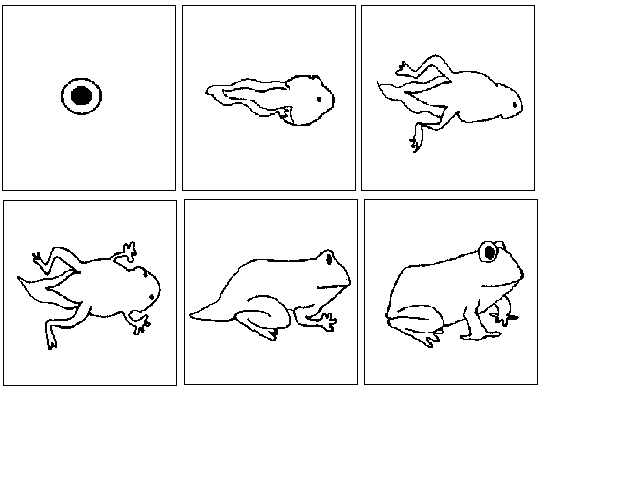
Child's Place has a sequence of black and white drawings of the life cycle of a frog for your use in whatever lesson you have planned.

Butterflies
Sewing School used pieces of pasta to put together a clever life cycle visual.

This easy life cycle paper craft is such an interesting way to teach each stage of a butterfly's life.

The Crafty Classroom shares step by step instructions for making stamps to represent each stage of the life cycle.
Along the Way used pom poms to create a colorful life cycle display.

Cards, Crafts, and Kids Projects  created a 3D butterfly collage included each stage of the life cycle.

Mama Jenn made different butterfly crafts for each stage of the life cycle.

General

Joel's On has links for life cycle activities for many different plants and animals.


The Wonder Years used cardstock to put together a life cycle learning tool.

Thursday, April 7, 2011

Spring Gardening & Planting Activities

Welcome! New to ABC and 123? Please check out our FAQ in the sidebar.

Lightning Bug Lit has put together an amazing, full color, printable package of preschool learning activities based on a gardening theme. The unit includes counting practice, number recognition, matching, drawing lines, and much more! Although we are unable to show you a sneak peek picture here on ABC & 123, you won't want to miss this link!


Homeschool Creations has shared a 2 part preschool garden printable pack.

Enchanted Learning has a Label the Garden Tools printable created as an english to spanish tutor worksheet. However, you could easily print 2 of these coloring pages and use the graphics to make a thematic matching game or to pratice new vocabulary terms.


Katina's Little Gardeners explains the life cycle of plants and provides some interesting links.


Quirky Momma shares a cute, colorful, and effective way for practicing counting with this imitation flower garden.


The Adventures of Bear encouraged an appreciation for nature with flower identification cards used for flower hunts on occassional nature walks.


Mama Pea Pod posted about their seed planting activity.

Monday, March 21, 2011

Teaching with Ticia: insects

Welcome! New to ABC and 123? Please check out our FAQ in the sidebar.

I almost forgot to write my post for today, but realized I better get that done.

Here in Texas, Spring is in full swing.  Trees are blooming, birds are chirping, and insects are starting to come out.

I know most of us traditionally get caterpillars about now and watch them turn to butterflies.  I'd like to suggest an alternative, or additional study:

CRICKETS!


Why crickets you might ask?

1.  They're part of Eric Carle's insect books, so you're probably going to already have a literature tie-in.

2.  You can pick up about 50 of them for $2.00 at a pet store.

3.  They're fascinating to study.

4.  There are a lot of experiments you can do with them.

Here's a few that we did:


1.  Straight observation, it's fascinating to watch them and write down what you see, some of ours:

They can walk up the walls.
They make noise.
They climb on each other.

2.  Check their reactions to different temperatures.  Watch how active they are at different temperatures.  First check room temperature, then put them in the refrigerator and see how much they move around in there.  Next, see how long it takes for them to become more active.  And finally if it's warmer outside, then you can take them outside to see how active they are.

3.  A secondary one to go with the temperature is to record how often they chirp at different temperatures.  They tend to chirp more if it is warmer.  They also get pretty noise at night.

4.  Observe what type of mouth they have.  Insects have 3 different types of mouths, chewing, sucking, and lapping.

5.  What do they eat?  The suggestions I saw was to put dry dog food soaked in water.  You could try different kinds of dog food and cat food to see which they eat the most of.  As a warning, they will eat their each other, so if your kids might be squeamish about that, take the dead out immediately.


Of course, even better than buying crickets from the store is catching them.  Texas in the fall is teeming with them, but at that point in time I'm so grossed out by them that I'm not willing to do this experiment then.

Thursday, January 27, 2011

Animals in the Snow

Welcome! New to ABC and 123? Please check out our FAQ in the sidebar.

The Adventures of Bear did a fatty experiment to understand how it is that polar bears can survive in such extreme cold.

Preschool, What Fun We Have has another variation on the experiment shown above. How do animals stay warm in the winter?

Whimsical Ways created a sorting and graphing activity using animal that like and dislike the snow.

Playing by the Book has a textured winter animal picture craft to go along with the book Polly and the North Star.


2 Teaching Mommies put together an activity sheet for making obsevations about snow.

Fun4Kids has an amazing post all about Animals in the Winter. There is a list of great books included, as well as rhymes and finger plays. You will also find a collage activity demonstrating animals in the winter and a super cute cardboard box bear cave. The textured polar bear craft is so fun too!

Friday, April 30, 2010

Celebrating Arbor Day

Welcome! New to ABC and 123?
Please check out our FAQ in the sidebar.

Here in the United States we are observing Arbor Day today. Arbor Day was established to encourage tree planting and care. Founded by J. Sterling Morton in 1872, it's celebrated on the last Friday in April.

To download a guidebook full of suggestions for celebrating, check out the official Arbor Day website.
Did you know? Be amazed at all you could learn about trees with this list of Tree Trivia facts.
Watch this video from Kid'sCrafts.com for a tutorial on making a simple Arbor Day card.
Read and enjoy some Arbor Day poems and rhymes.

In celebration of all things trees, and the impact they have on our Earth, it is also a good day to try some of those Earth Day activities that you didn't have time for on the 22nd!

Teaching Tiny Tots has submitted a great post about creating a soda bottle terrarium with your tots.
As part of the Sunflower Club activities at NurtureStore they've conducted an experiment to see what seeds need to grow. An appropriate extension activity for Arbor Day.
Play Activities put together a family activity for celebrating the Earth. They made plantable seeded paper and have shared the step by step instructions with all of us!

Wednesday, January 27, 2010

Winter Wondertime

Welcome! New to ABC and 123?
Please check out our FAQ in the left sidebar.

Arts and Crofts has put together a helpful list of winter stories that would be wonderful to add to your winter wondertime lessons!
This is a science experiment making crystals from Borax and hot water, using pipe cleaner in the form of a snowflake.

 
Monkeyin Around Times Two sent us a submission, experiementing with glue, using the book Snowballs.

 
Dalle Un Colinho sent us a fun submission for indoor snow.  She says,
"...Snow is "porespan" (I don't know how they say in English, is a kind of white cork to pack things). It was very fun to make snow indoors, move by wind and of course then came the snow removal equipment :D (the post is very funny, don't forget to use the translator :D)"


Adventures of Mommyness shared how they made fake snow.

Thursday, May 14, 2009

Gardening and Planting Activities

Welcome! New to ABC and 123?
Please check out our FAQ in the left sidebar.

Gardening is a wonderful learning activity to do with your child. Children are naturally curious and full of energy that's just waiting to be harnessed! Choosing which plants to grow, digging in the dirt, and then having the fun of watering it day is something most kids will be interested in without too much prodding.

Turn up the learning factor by making predictions: which plant will grow the fastest, which one the highest, and so on. Keep record journals and measure your plants growth with a ruler, younger children can draw pictures of their plants a set intervals to track the changes as their plants grow. Try planting a jelly bean, and seeing what happens, there's always someone hoping that candy will soon be popping through the ground!

Plus it's very rewarding to your child to reap the benefits of gardening, a meal or side dish made with fruits or vegetables that he or she has grown and nutured. It also teaches kids about all the work that goes into farming and appreciation for the food we eat each day.

It seems that a lot of our members have a green thumb! Go see what all our gardeners in training have been working on with their parents! If you have an activity or a favorite book about gardening please share it with us and leave a comment!

Teaching Tiny Tots has submitted a great article about planting a vegetable or herb garden.


CanTeach has a fun list of gardening poems and tunes!

The Magic Onions shares about the delights & lessons in planting mint!


She also shares about the daily wonders in a moss garden.


This fairy garden is also from The Magic Onions. Check out her post on finding fairy furniture.


Adventures of a Flake made cute Fairy Gardens


She also planted radishes as a play date activity.

Wednesday, May 13, 2009

Caterpillars and Butterflies

Welcome! New to ABC and 123?
Please check out our FAQ in the left sidebar.

This week's Wondertime Wednesday focuses on the life cycle of a butterfly. Thanks for all the fun submissions for this post!


Michelle @ Her Cup Overfloweth made a colorful construction paper caterpillar.

CoCo Cake Cupcakes made a caterpillar sweet enough to eat!

The Masked Mommy made a very clever Very Hungry Caterpillar snack.

Miller Moments made their own painted version of a beautiful butterfly.

Letters Numbers and Books Oh My posted all about Butterfly Bb Day.

Adventures of a Flake explains how to make coffee filter butterflies.

Two different version of coffee filter and clothespins butterflies were made by Katie from Katie's Nesting Spot's daughter in preschool. The first one was made with a paints applied with an eye dropper, a great way to work on fine motor practice, and the second was made with Dot painters.
Meninheira submitted a fun post with pictures of Spring activities. A butterfly would be a fun addition to the floral dioramas and would teach your child a bit about habitats. It might also be fun to put the pupa stage into this type of visual.

4 Crazy Kings shares a cute suggestion for recycling artwork to make a handprint butterfly.

Casa Camacho is featuring 3D butterfly creations.

Totally lovin' the Eric Carle colors in Deep Space Sparkle's illustrator inspired butterflies.

From the looks of our submissions, The Very Hungry Caterpillar seems to be the book of choice for teaching children about the life cycle of a butterfly. Let us know what other books you have read/enjoyed that also teach about butterflies!